Welcome To Part 7 Of Our Series: BUILT BY HAND: A BEGINNERS GUIDE TO HAND TOOLS
Block Planes — Your Most-Reached-For Tool
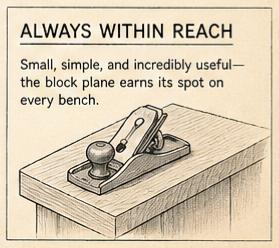
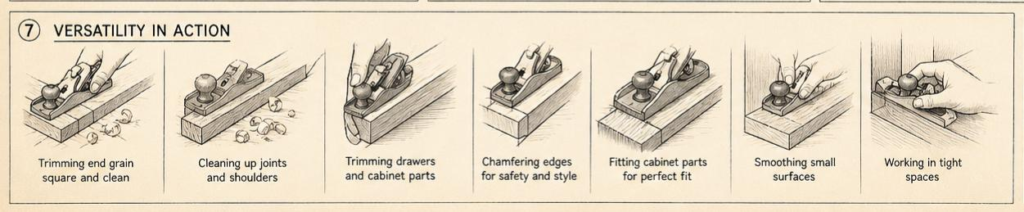
Ask experienced woodworkers what’s always within reach on their bench, and many will say a block plane. Despite being one of the smaller tools in the shop, the block plane earns its place through sheer versatility. Trimming end grain, cleaning up joints, chamfering edges, fitting cabinet parts — the block plane handles all of these quickly and without much setup. It’s a tool worth understanding well.
A Plane For All Seasons
What Makes a Block Plane Different
A block plane is smaller and lighter than a bench plane — typically 6 to 7 inches long — and it’s designed to be used with one hand, though you can apply extra pressure with the fingertips of your other hand at the toe. The big functional difference is in the blade angle.
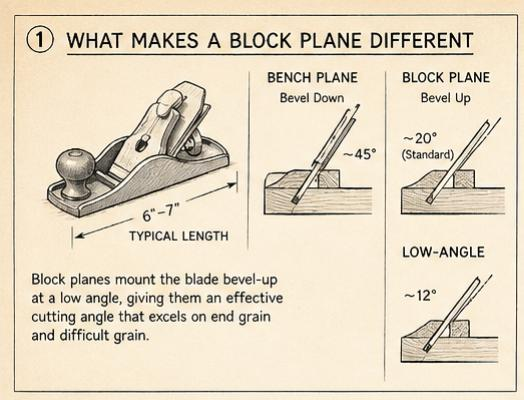
Standard bench planes mount the blade with the bevel facing down at around 45 degrees. A block plane mounts the blade bevel-up at around 20 degrees, resulting in a lower effective cutting angle. This lower angle is what makes block planes so effective on end grain, which is among the most difficult wood surfaces to work cleanly.
A low-angle block plane takes the blade angle even further down to about 12 degrees. If you’re buying a block plane, the low-angle version is the better choice — it handles end grain and difficult grain more effectively and is more versatile overall.
End Grain Work
End grain is what you see when you look at the cut end of a board. It’s denser than face grain, cuts differently, and will tear badly with a dull or poorly angled tool. The block plane handles it better than almost anything else in the hand tool kit.
When planing end grain, make sure the blade is very sharp — sharper than you’d need for face grain work. Plane from both ends toward the middle to avoid splitting out the far corner, or clamp a scrap block to the far edge so the plane has somewhere to exit without tearing the wood.
A shooting board — a simple jig that holds your work at a precise angle while the plane runs along a reference surface — is an excellent companion to the block plane for trimming end grain to exact length and getting perfectly square ends.
Fitting Joints and Trimming
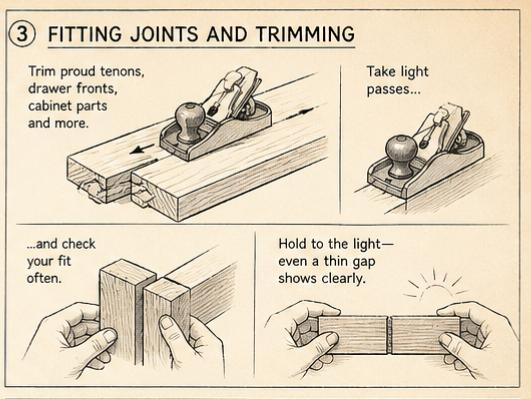
One of the most common uses for a block plane is trimming joints until they fit. A proud tenon shoulder, a drawer front that’s slightly too long, a cabinet back that needs a little taken off — the block plane handles these with quick, controlled passes.
The key is to take light passes and check your fit frequently. It’s much easier to take a little more off than to add wood back. One good technique is to hold the work up to the light against its mating piece — even a thin gap shows clearly.
Chamfering
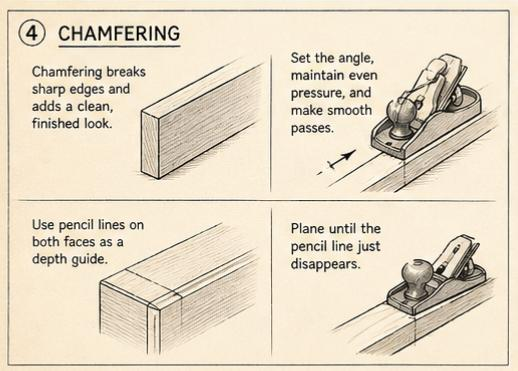
Chamfering means creating an angled flat along an edge. It’s both functional (sharp edges splinter and feel uncomfortable) and decorative. A block plane makes chamfering quick and precise. Set your desired angle, maintain consistent pressure, and make smooth passes along the edge
.For a consistent chamfer along a long edge, many woodworkers draw a pencil line on both faces of the board as a depth guide. When the pencil line just disappears, the chamfer is done.
Setting Up and Adjusting
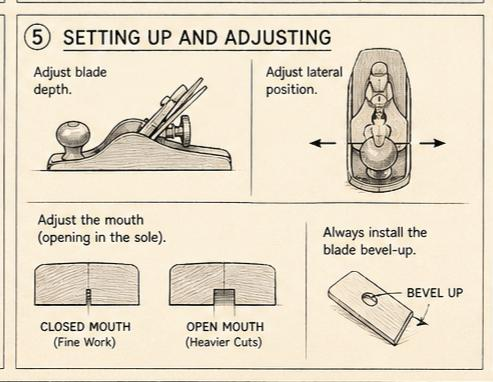
A block plane has the same basic adjustments as a bench plane: blade depth and lateral position. Most also have an adjustable mouth — the opening in the sole where the blade protrudes. Close the mouth down for fine work on difficult grain; open it up for heavier cuts.
Always install the blade bevel-up in a block plane. It sounds obvious, but it’s an easy mistake to make, and a bevel-down block plane won’t cut properly.
Keeping It Sharp
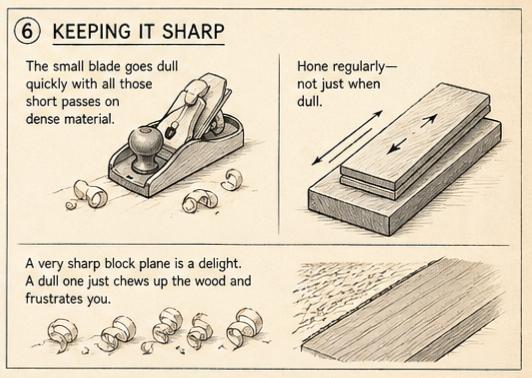
The block plane’s small size means the blade goes dull relatively quickly since you’re taking lots of short passes on dense material like end grain. Get in the habit of honing the blade regularly — not just when it’s obviously dull, but proactively. A very sharp block plane is a delight. A dull one just chews up the wood and frustrates you.