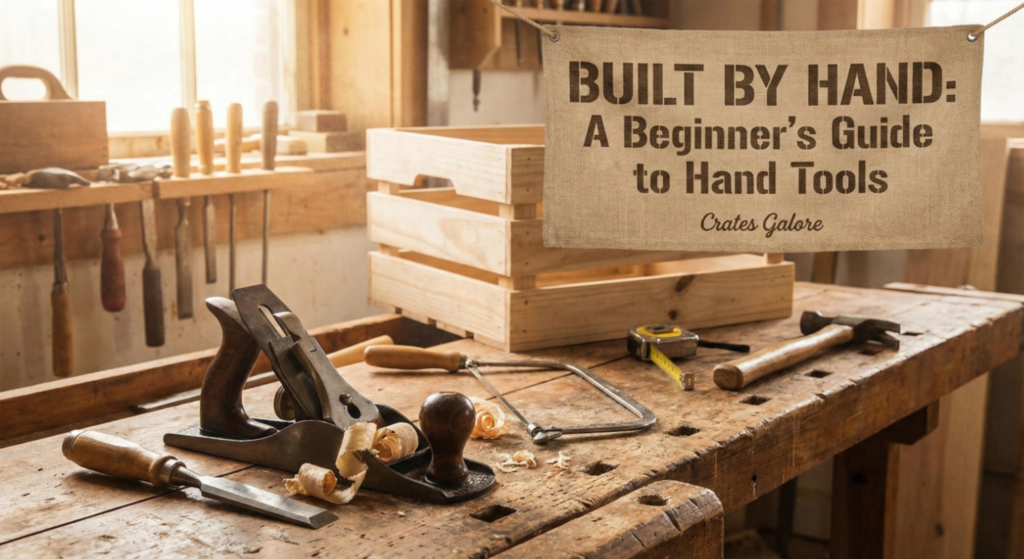
Your First Hand Tool Kit (and What to Skip)
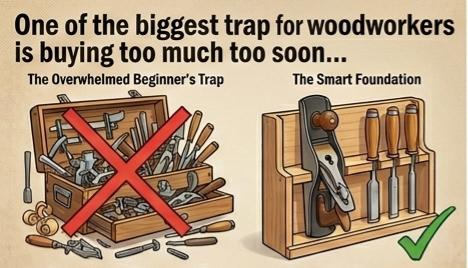
One of the biggest traps for new woodworkers is buying too much too soon. Tool catalogs are full of beautiful, specialized equipment, and it’s easy to convince yourself you need all of it before you can start. You don’t. A focused starter kit of well-chosen hand tools will get you through most projects, and you’ll know exactly what else you need once you’ve been working for a while.
Here’s what actually matters.
Your Bench Plane
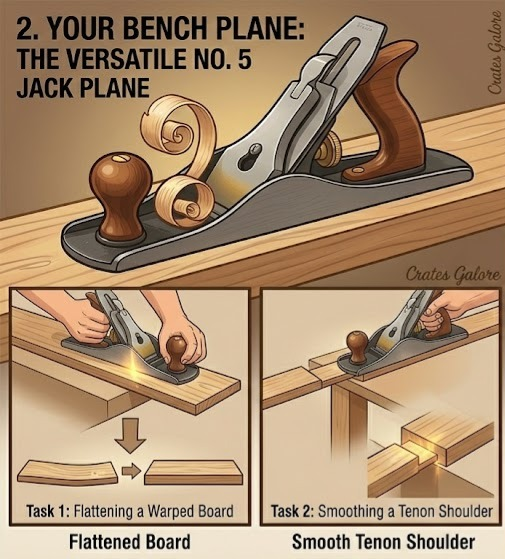
If you only buy one plane, make it a No. 5 jack plane. It’s a mid-sized bench plane, typically 12 to 14 inches long, and it handles the tasks you’ll hit most often: flattening boards, smoothing surfaces, and cleaning up joints. It’s versatile enough to substitute for a smoothing plane or a jointer plane in most situations.
Buy new from a reputable brand or look for a vintage Stanley No. 5 — they’re well made and widely available used. Whichever you choose, make sure the blade is sharp before you judge the tool. A dull plane feels terrible; a sharp one is a pleasure to use.
Your Chisels
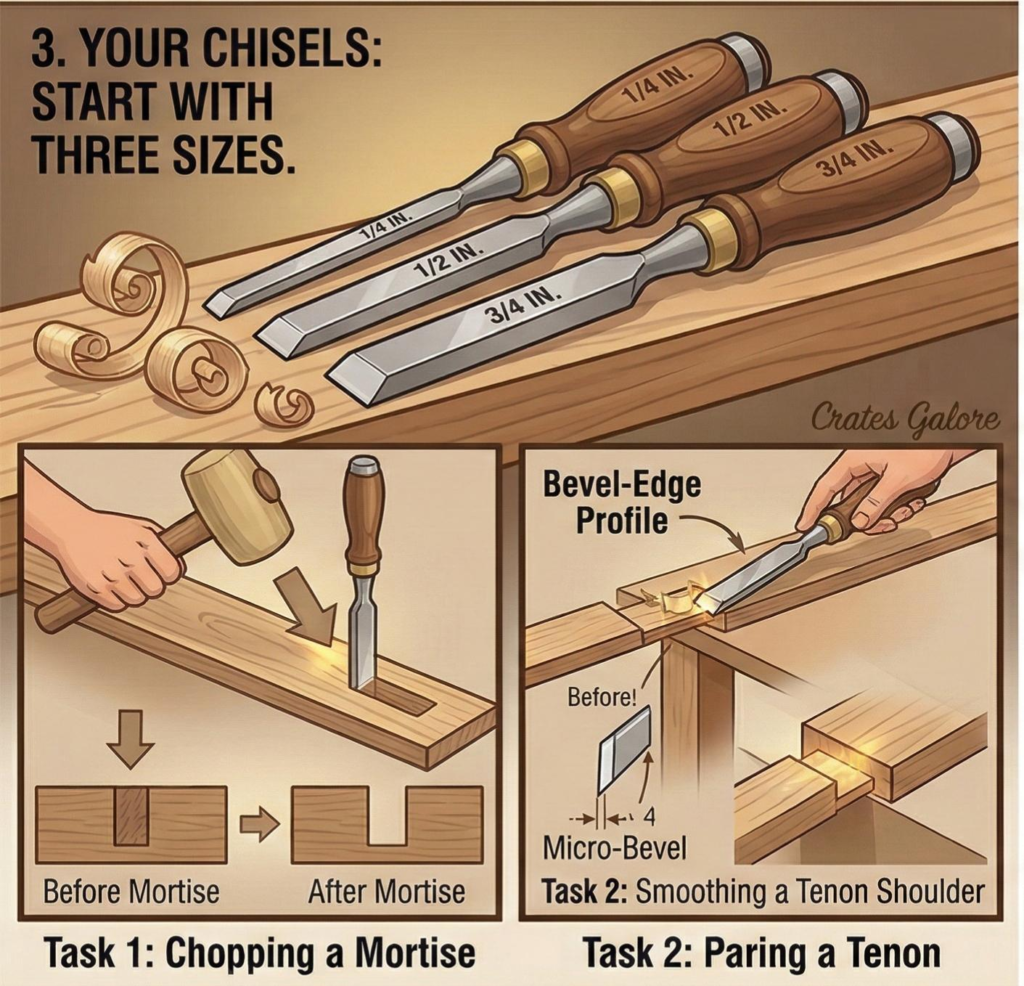
Start with three bevel-edge bench chisels: one around 1/4 inch, one around 3/8 to 1/2 inch, and one around 3/4 inch. These three sizes cover most joinery work. You’ll use them for chopping mortises, cleaning up joint corners, paring tenon shoulders, and a dozen other tasks on every project.
Don’t cheap out here. A decent set of chisels, new or vintage, will last your entire woodworking life if you take care of them. The differences between a ten-dollar chisel and a fifty-dollar chisel shows up in edge retention and how they feel in your hand. If your budget is tight, look for quality vintage chisels — brands like Marples, Buck Brothers, and Swan are worth hunting for.
A mallet is also essential — a solid wooden or rubber-headed mallet for driving chisels. Never use a metal hammer on a chisel handle.
Your Saws
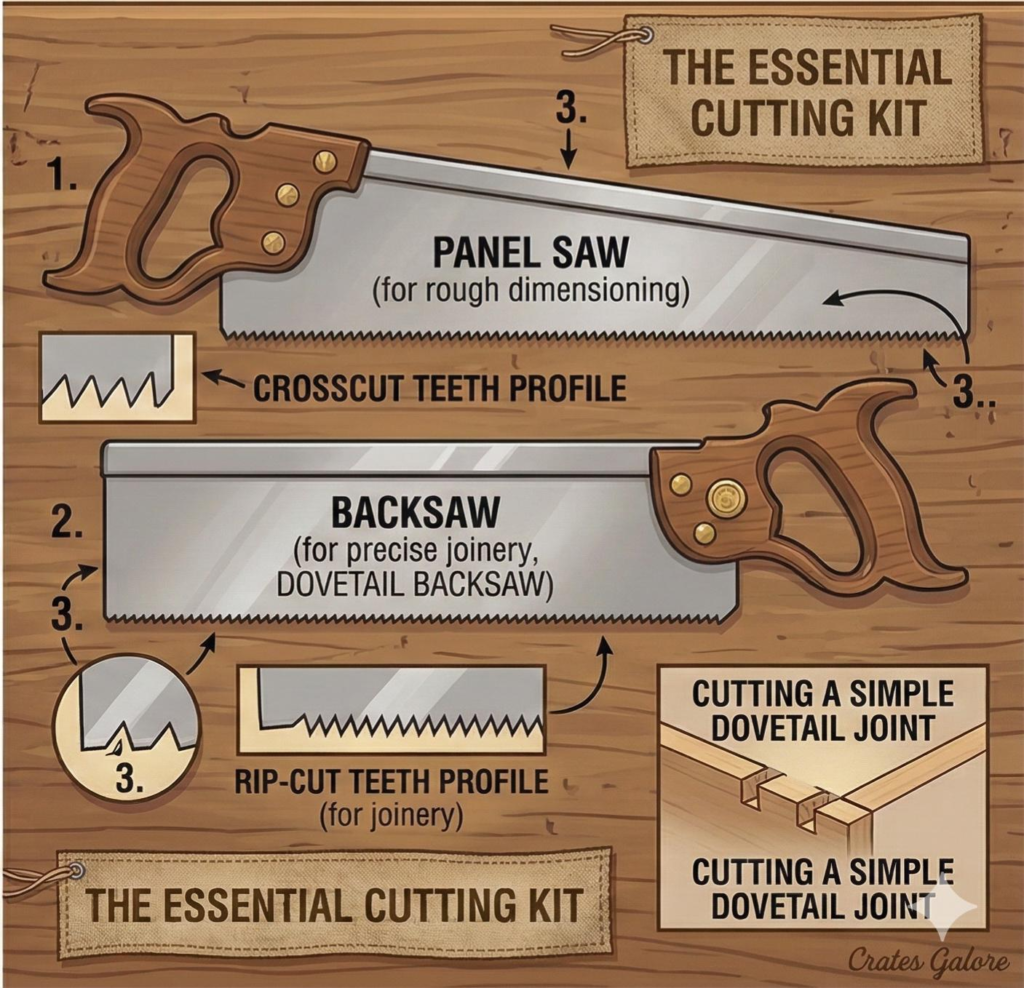
You need two saws to start: a panel saw for rough dimensioning and a backsaw for joinery.
For the panel saw, a basic hardpoint crosscut saw works fine. These are inexpensive, disposable when dull, and do the job of cutting boards to rough length without fuss.
For joinery, a dovetail saw or a Japanese pull saw is the right choice. These saws have fine teeth and stiff blades that let you cut accurate joints. If you’re on a tight budget, a Japanese pull saw is excellent value — they cut cleanly, are reasonably priced, and last a long time before needing replacement.
Measuring and Marking Tools
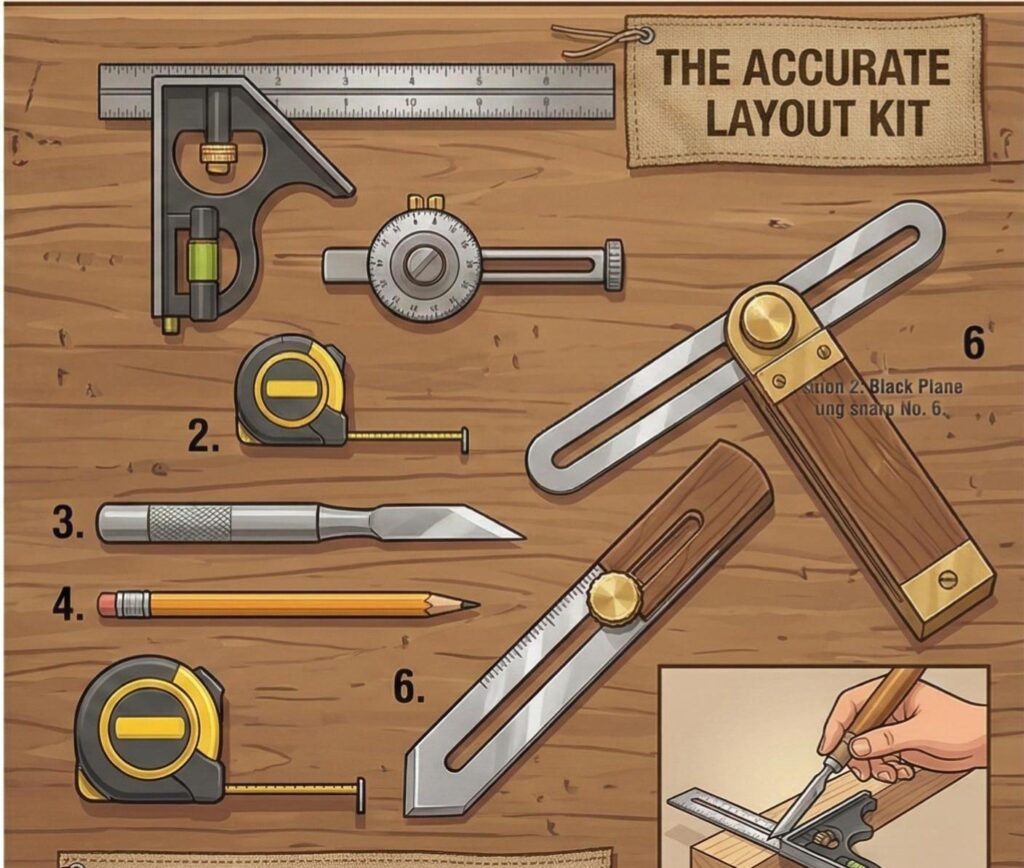
Accuracy starts before you ever pick up a saw or chisel. You need a combination square (a 12-inch model is the most useful) a bevel gauge, a marking gauge, a marking knife, a pencil, and a tape measure. That’s it. These tools let you lay out joints accurately and transfer measurements without guesswork.
What to Skip — For Now
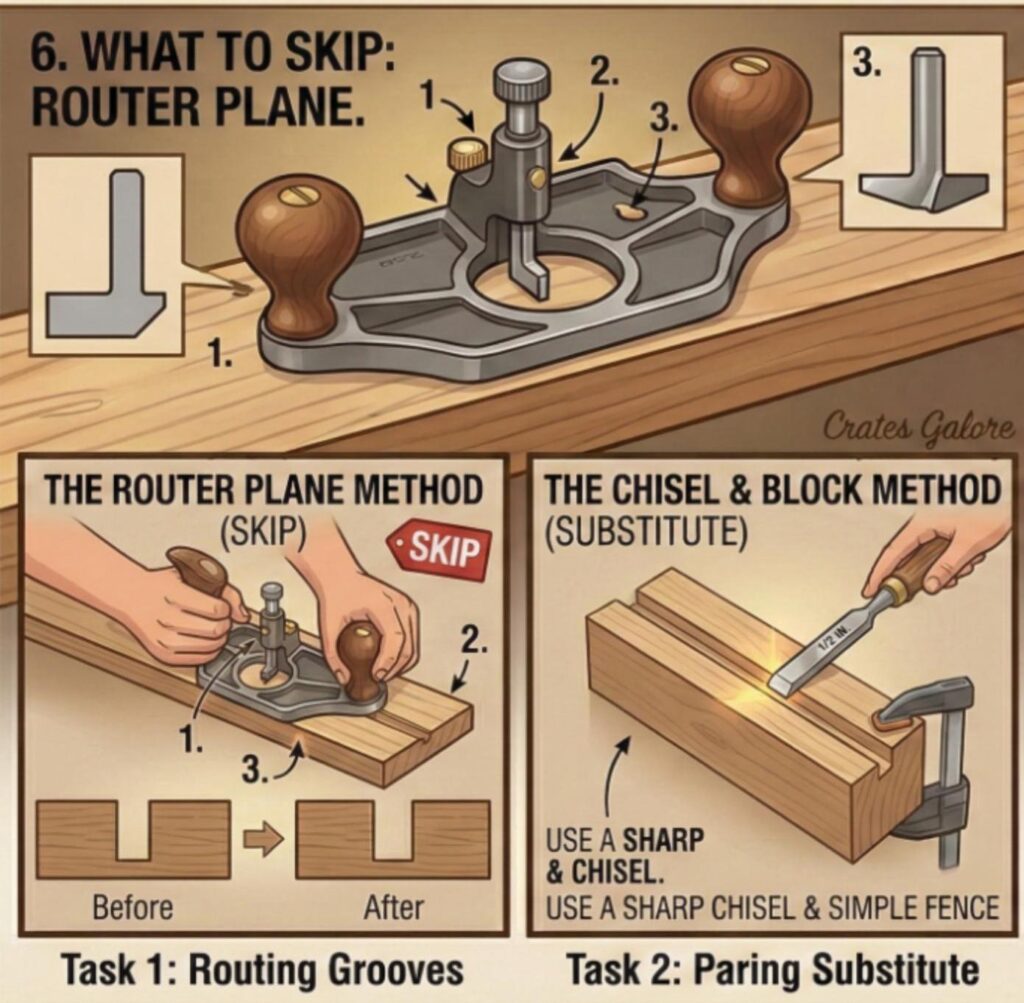
Block planes, shoulder planes, router planes, plow planes — these are all useful tools, but none of them are essential to get started. A sharp chisel can do most of what a router plane does. A bench plane can handle most of what a block plane does. Buy the specialized tools when you hit a specific problem they solve; don’t buy them in anticipation.
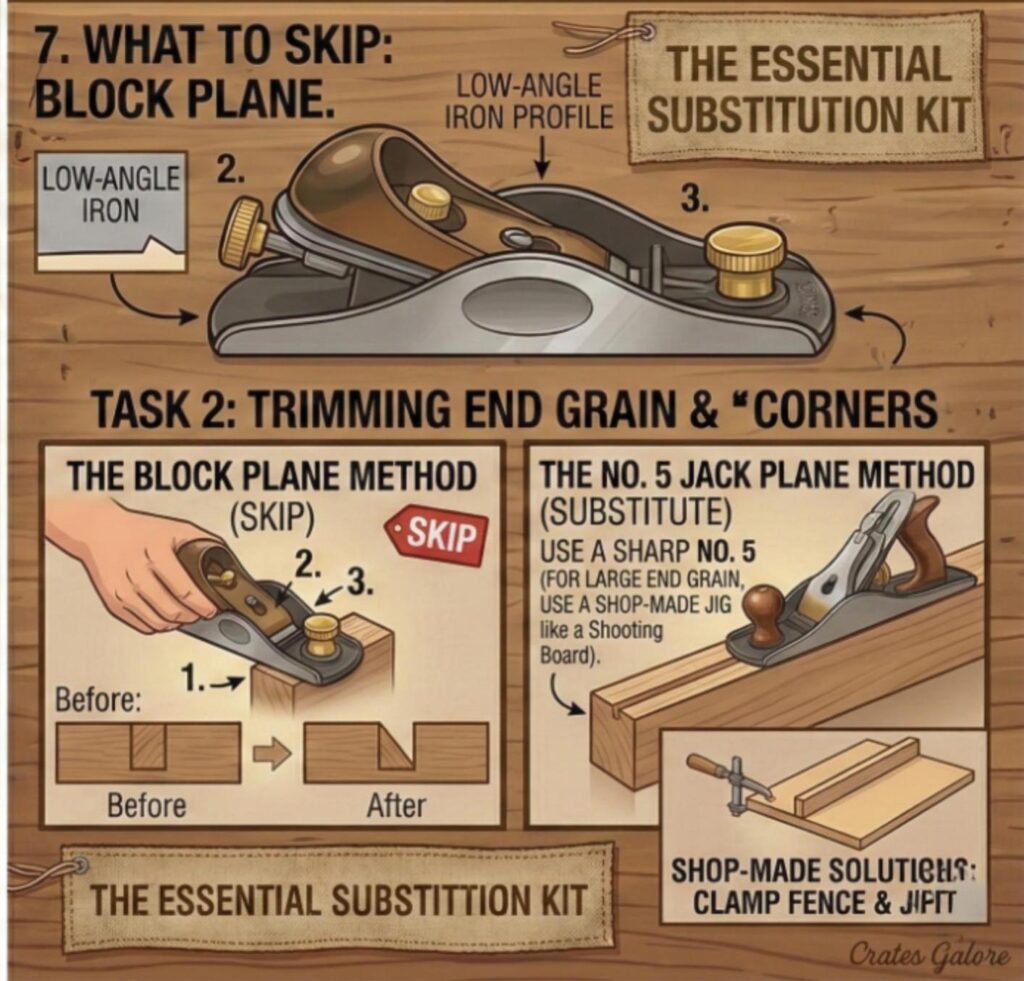
The same goes for large collections of chisels, multiple saws, and specialty marking tools. Build your kit around actual needs, not hypothetical ones.
A Note on Quality
Buy the best quality you can afford in the tools you’ll use most — chisels, your plane, and your backsaws. For everything else, serviceable is fine. A good set of chisels and a sharp plane will teach you more about woodworking than any amount of gear collecting.