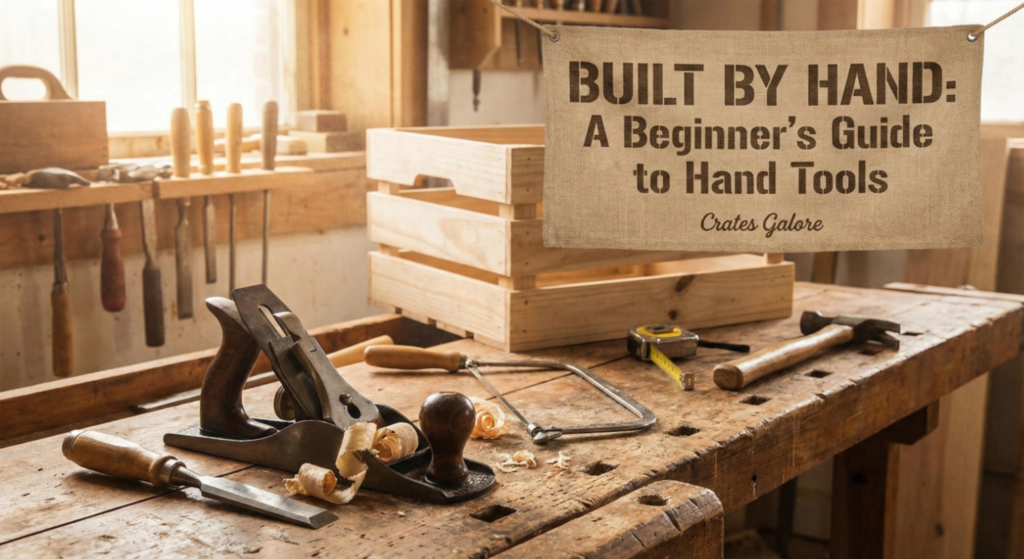
Backsaws and the Miter Box — Precision Cutting for Joinery
Welcome to Part 5 Of Our Series: BUILT BY HAND: A BEGINNERS GUIDE TO HAND TOOLS
GoTo Part 6
There’s a difference between cutting a board to rough length and cutting a joint to finished dimension. The first job can be done with any reasonably sharp saw. The second requires a backsaw — and it requires that you use it well.
Backsaws are the precision instruments of the hand tool world. Understanding them and how to get the most out of them is one of the most useful skills you can develop as a woodworker.
What Makes a Backsaw Different
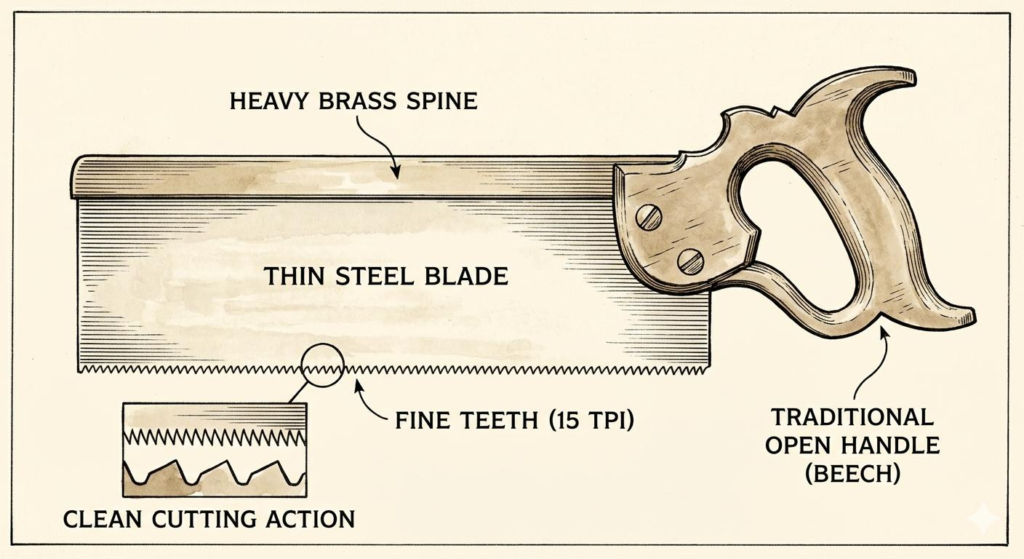
The defining feature of a backsaw is the heavy spine — usually brass or steel — that runs along the top edge of the blade. This spine does two things. It keeps the thin blade perfectly straight, and its weight does much of the cutting work, so you don’t need to push hard into the cut.
The teeth are small and finely set, designed for clean, accurate cuts rather than fast material removal. The result is a saw that leaves a smooth surface and cuts to a line with precision.
Types of Backsaws
The tenon saw is the largest backsaw you’ll typically use, with a blade of 10 to 14 inches and 13-15 TPI. It’s used for cutting tenon cheeks, larger joints, and heavier cross-cutting work where a dovetail saw would be too small.
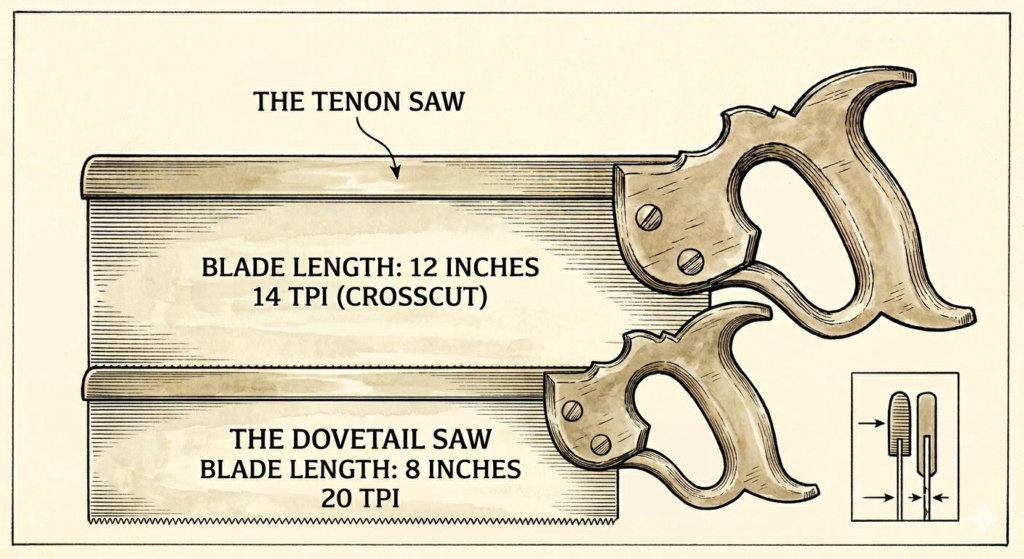
The dovetail saw has a shorter blade — around 8 inches — and much finer teeth at 16-22 TPI. Its name tells you its primary job: cutting the precise angled cuts in dovetail joints. The narrow kerf and fine teeth leave a surface that needs little or no cleanup.
If you’re buying one backsaw to start, a dovetail saw covers the most ground. Its fine teeth handle both rip and crosscut work adequately, and it will cut anything a tenon saw can cut, just more slowly on larger work.
Using a Backsaw
Start the cut with the saw at a shallow angle — almost flat to the surface. Make two or three light strokes with just the heel of the blade to establish a small kerf. Once that kerf is established, gradually lower the saw to horizontal and extend your strokes to use the full length of the blade.
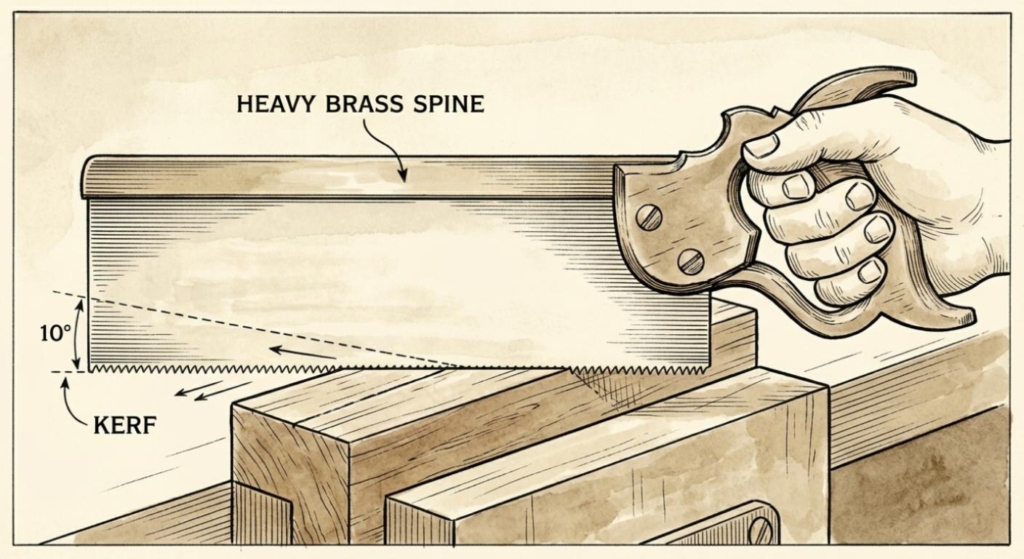
Hold the saw lightly. Grip, don’t strangle. The spine keeps the blade stiff; your job is to guide it, not to push it. If you’re working with a sharp saw, the weight of the spine provides most of the cutting force you need.
Pay attention to your starting position. Stand so that your forearm, wrist, and the saw are in a straight line. When your body is properly aligned with the cut, it’s much easier to saw straight.
The Miter Box
A miter box is a jig that guides a backsaw through angled cuts. The simplest versions are a three-sided wooden box with slots precut at 90 degrees and 45 degrees. More sophisticated versions are made of metal with adjustable stops that can be set to any angle.
For a beginner, a basic wooden miter box with a good tenon saw is a powerful combination. You can cut moldings, trim pieces, and frame components quickly and accurately — the kind of cuts that otherwise require careful setup and good saw technique.
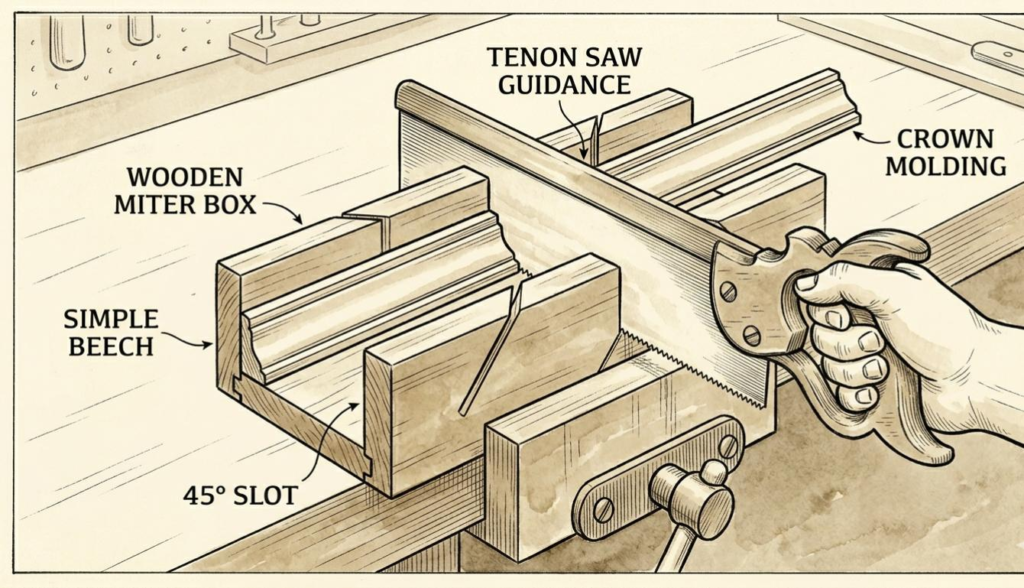
To use one: set the work firmly against the back of the box, align your cut line with the appropriate slot, hold the work in place with your non-cutting hand or clamp it, and draw the saw back and forth through the slots with light, smooth strokes. Let the slots guide the blade — don’t force it sideways.
Caring for Backsaws
A good backsaw is an investment that lasts for decades if you treat it well. Store it so the teeth aren’t resting against anything that could dull them. Keep the blade lightly oiled to prevent rust, especially if your shop is damp.
When a backsaw starts to feel like it’s dragging or requiring more effort than it used to, it needs sharpening. Fine-toothed saws can be resharpened with a triangular file, though this takes some practice. If you’re not ready to sharpen saws yourself, many saw sharpening services exist, and the cost is well worth it for a quality saw.
The Payoff
Mastering the backsaw is one of the most rewarding skills in hand tool woodworking. When you can cut a joint to a line consistently and accurately, most of the hard work in making furniture becomes manageable. Everything else is just refinement.