Welcome to your woodworking journey. Before we dive into joinery techniques or tool selection, let’s start with something fundamental: understanding the remarkable material you’ll be working with. Wood isn’t just another building material—it’s humanity’s oldest ally, a living legacy, and perhaps our most valuable renewable resource.
Trees Versus Gold: A Different Kind of Wealth
Trees are undeniably a valuable source of wealth, but they are not valuable in the same way gold is. Although it could be argued that wood is as beautiful and desirable as any precious metal, the great value of trees lies in their being a renewable resource. Unlike gold, silver, or other minerals extracted from the earth never to be replaced, trees can be regrown, forests can be replanted, and the cycle can continue indefinitely with proper stewardship.
Consider this: when you extract gold from the earth, that deposit is gone forever. But when you harvest a tree from a sustainably managed forest, new seedlings can be planted to replace it. In fact, in many modern forestry operations, more trees are planted each year than are harvested. This fundamental difference makes wood not just a material, but a partnership with nature—one that can provide for generations to come if we manage it wisely.
The true wealth of trees extends far beyond their timber. While they grow, trees absorb enormous amounts of carbon dioxide from the atmosphere, storing it within their wood. About half the dry weight of wood is carbon captured from the air around us. Even after a tree is harvested and transformed into furniture, flooring, or a beautiful turning, that carbon remains locked away, sometimes for centuries. In this way, every piece of wood in your workshop represents a small victory against climate change.
The Unmatched Versatility of Wood Throughout History
Historically, no other material has been so adaptable and of such immeasurable benefit to mankind as wood with its infinite variety of types and uses. The archaeological record tells us that wood has been integral to human civilization for at least 8000 years, with evidence of woodworking dating back to the Mid-Pleistocene in Africa. Our earliest ancestors crafted wooden spears with fire-hardened tips, built shelters from branches and logs, and created the foundations of settled life.
As civilizations rose and fell, wood remained constant. The ancient Egyptians used it extensively in their monuments and daily life. The Romans recognized forests as “the supreme gift bestowed on man,” providing food, shelter, and fuel. Medieval shipwrights built the Viking longships and the caravels of the Age of Discovery from wood, vessels that enabled trade, exploration, and the exchange of cultures across vast oceans. The Industrial Revolution brought steam-powered sawmills and expanding railways—both dependent on wood for their growth.
From modest log cabins to magnificent Chinese temples, from the humblest wooden spoon to intricately carved furniture, from paper and books to barrels and bridges—wood has adapted to serve every human need imaginable. No other material can claim such versatility or such an enduring presence across all cultures and all ages of human history.
Why Wood Remains the Foundation of Craftsmanship

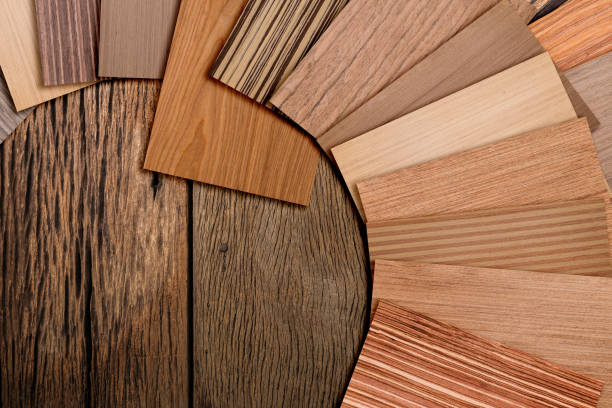
Part of the attraction of woodworking comes from the opportunity to work with wood displaying dramatic differences in color, figure, and grain pattern. Every board tells a story written by nature. Wood color is a product of how its tannins, gums, and resins react to exposure to air. Often, wood will continue to darken and change color over time, developing a rich patina that only enhances its beauty.
Figure—the surface pattern on a board—can be the result of numerous natural causes ranging from drought or freezing to prevailing winds, disease, age, or insect damage. This means that no two pieces of wood are ever truly identical. The grain display depends on the direction and regularity of the wood fibers relative to the center of the trunk, as well as how the lumber is cut from the tree. Quarter-sawn, rift-sawn, or plain-sawn: each sawing method reveals different aspects of the wood’s character.

This infinite variety is precisely why wood remains the foundation of craftsmanship. Unlike synthetic materials that come from factories with uniform properties, wood demands that the craftsperson engage with each piece individually, reading its grain, understanding its character, and working with—not against—its natural properties. This dialogue between maker and material is what transforms woodworking from mere construction into an art form.
Modern technology has enhanced rather than replaced wood’s role in craftsmanship. Cross-laminated timber and glued laminated timber create structural elements stronger than steel. Engineered timber products maximize efficiency and performance. Yet even these innovations are fundamentally about understanding and leveraging wood’s natural properties in new ways. The material itself—renewable, beautiful, and endlessly variable—remains irreplaceable.
The Living Tree: Understanding Your Material
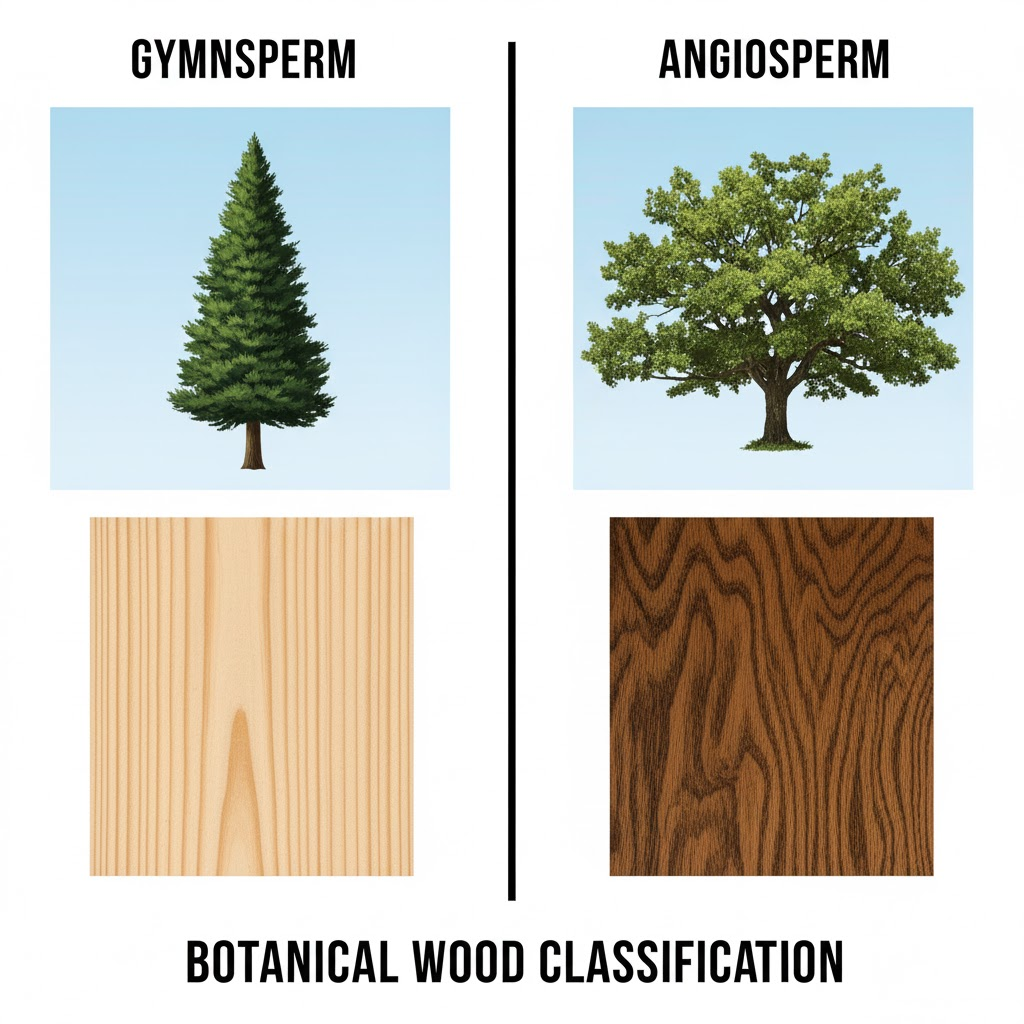
To truly appreciate the properties of wood and how it is worked and finished, it is worthwhile understanding something of the way trees grow. Trees form an important division of the plant kingdom known as the Spermatophyta (seed-bearing plants). This division is subdivided into two major groups that every woodworker should know:
Gymnosperms are needle-leaved coniferous trees commonly referred to as softwoods. Despite the name, “softwood” doesn’t always mean the wood is physically soft—some softwoods are actually harder than some hardwoods. The term refers to the botanical classification of the tree. Examples include pine, fir, spruce, cedar, and redwood. Softwoods typically grow faster than hardwoods and their cellular structure is generally simpler and more uniform.
Angiosperms are broad-leaved trees known as hardwoods and may be either deciduous (losing their leaves seasonally) or evergreen (retaining foliage year-round). Again, the name can be misleading—balsa is technically a hardwood despite being extremely lightweight and soft. This category includes oak, maple, cherry, walnut, mahogany, and countless other species prized by woodworkers for their beauty and working properties.
The structure of a typical tree consists of three main parts: the bole or trunk (where we get most of our lumber), the crown (the branches and foliage that capture sunlight for photosynthesis), and the root system (which anchors the tree and draws water and nutrients from the soil). Within the trunk itself lies a fascinating architecture. At the very center is the pith, the tree’s original stem as a sapling. Surrounding this is the heartwood—older, inactive cells that have become dense and often darkly colored. The heartwood no longer transports water but provides structural support.
Outside the heartwood is the sapwood, the younger, living portion of the trunk that actively conducts water and nutrients from roots to leaves. The cambium, a thin layer of cells between the wood and the bark, is where all growth occurs, adding new rings of wood each growing season. Finally, the bark protects the tree from injury and disease.
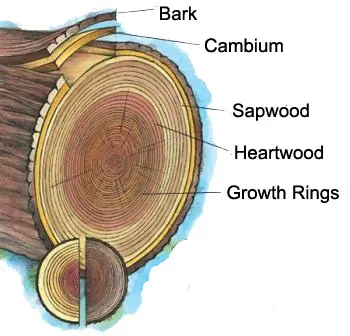
Understanding this structure helps explain many of wood’s characteristics. The annual growth rings visible in cross-sections show periods of rapid spring growth (earlywood, which is lighter and softer) and slower summer growth (latewood, which is darker and denser). These rings are not just beautiful—they’re a record of the tree’s life, showing wet years and dry years, good growing seasons and difficult ones. As a woodworker, you’re quite literally holding history in your hands.
Sustainability: Managing Forests for Future Makers
The story of wood and humanity is also a cautionary tale. Ancient civilizations from the Middle East to Rome depleted their forests through unsustainable harvesting, fundamentally altering their landscapes and even contributing to the decline of their societies. The Industrial Revolution’s appetite for timber led to widespread deforestation. These historical lessons have taught us that wood’s renewability is not automatic—it requires active, responsible stewardship.
Today, sustainable forestry practices ensure that wood can truly be the renewable resource it has the potential to be. When forests are managed sustainably, the rate of wood consumption does not exceed the rate at which trees grow back. This isn’t just theory—modern forestry often involves harvesting trees that are removed during thinning operations necessary to help remaining trees grow stronger and healthier. After harvesting mature trees, new seedlings are planted, starting the cycle over again.
Wood: The Material of the Future
As we face the environmental challenges of our time, wood stands out not as a relic of the past but as a material uniquely suited to build a sustainable future. It is the only major construction material that is truly renewable, that stores carbon rather than releasing it, and that requires minimal energy to process into usable form. Modern innovations in engineered wood products are enabling construction of tall buildings, long-span bridges, and structures that would have been impossible just decades ago—all while maintaining wood’s environmental advantages.
For the beginning woodworker, understanding wood as a renewable resource adds depth and meaning to your craft. Every project you create participates in this ancient yet evolving relationship between humanity and trees. When you select lumber, consider choosing sustainably sourced wood. When you design a project, think about minimizing waste and making efficient use of the material. When you finish a piece, take pride in knowing you’ve transformed a renewable resource into something beautiful and useful that may last for generations. Wood’s infinite variety means there is always something new to discover—a species you haven’t worked with, a grain pattern that surprises you, a technique that brings out unexpected beauty. Its renewability means that your craft can continue, that forests can thrive, and that future woodworkers will have the same opportunities you have today. This is why woodworking is not just a hobby or profession, but a partnership with the natural world
Beginning Your Journey
As you embark on your woodworking journey, remember that you’re joining a tradition that stretches back to our earliest ancestors and forward to generations yet unborn. The wood in your hands is more than a material—it’s a connection to living trees, to the history of human craftsmanship, and to the possibility of a sustainable future. Learn to read its grain, respect its properties, and appreciate the remarkable fact that, unlike nearly any other material we use, wood can be regrown.
The question “Why wood?” has many answers: Because it’s renewable. Because it’s beautiful. Because it’s versatile. Because it connects us to nature and to history. Because working with wood teaches us patience, observation, and respect for the natural world. Because in an age of synthetic materials and mass production, wood remains authentically alive, unique, and individual.
Welcome to woodworking. Welcome to a craft built on the most remarkable renewable resource our planet provides. The journey ahead is limited only by your imagination and the infinite variety of wood itself.